My contribution
I proposed supplementing user stories with use cases for key processes, and designed interfaces and interactive prototypes. Working with analysts and developers, I clarified states, constraints and the handoff to engineering.
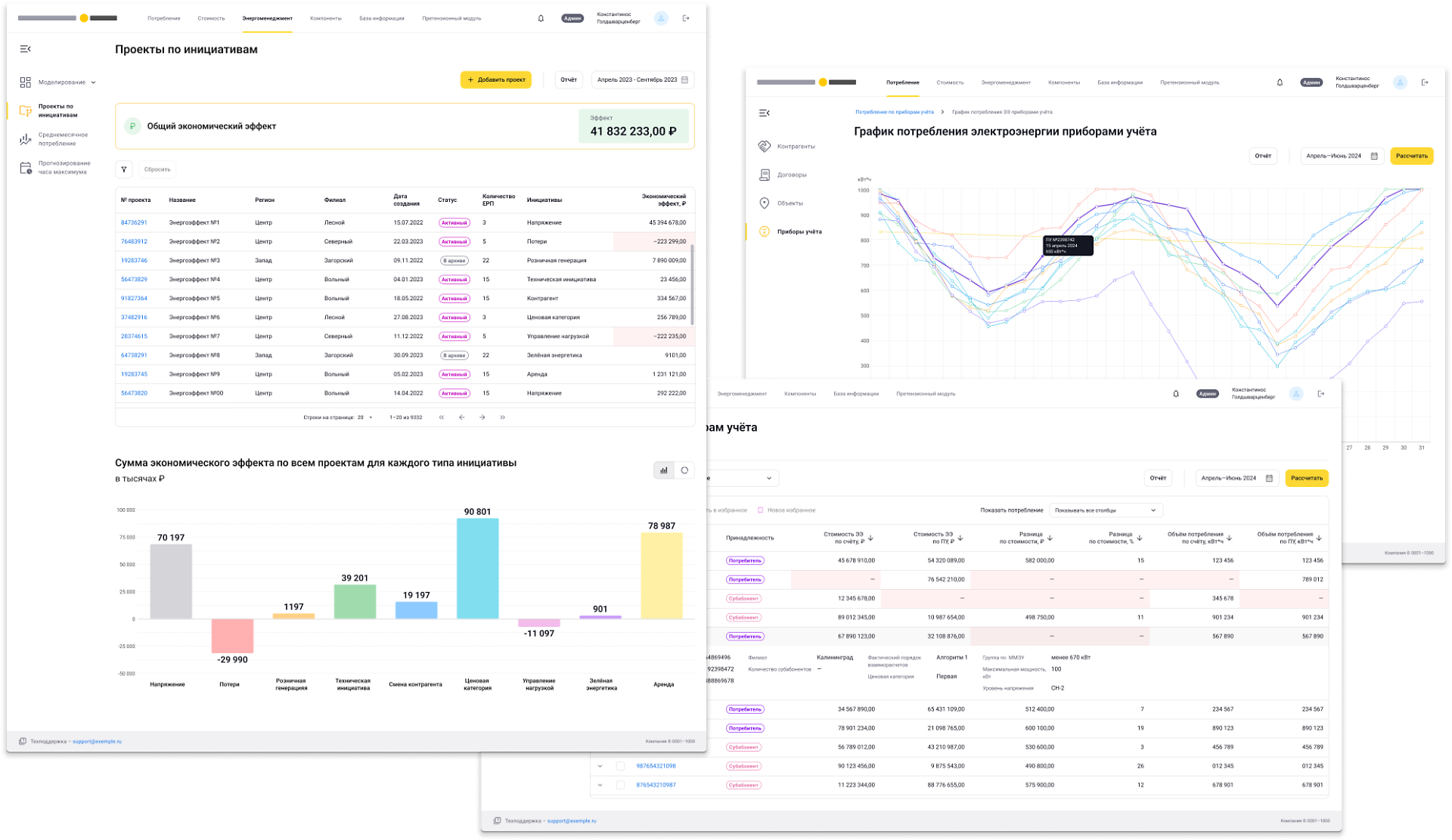
An enterprise energy management platform for a large telecommunications operator. I helped translate complex business logic into scenarios and interfaces, connecting large tables, entity detail views and their historical states into one system.
Context and role
The platform brought together consumption and cost calculations, contracts, facilities, meters and energy management. Each area needed to account for related data, access permissions and exceptions.
My contribution
I proposed supplementing user stories with use cases for key processes, and designed interfaces and interactive prototypes. Working with analysts and developers, I clarified states, constraints and the handoff to engineering.
Team collaboration
Business rules and priorities were developed together with the Product Manager, analysts and the client. We checked the implementation with developers and QA.
Before
 participant
need
value
Questions remain
 conditionsalternativeserrorssystem responses
Clarification needed at handoff
After
 role and goal
need and actions
value and system response
Also documented
 conditions and constraintsstatescompletion criteria
Fewer questions from analysis through QA
To introduce the approach, I wrote the first 16 use cases as examples and gathered feedback from the people involved. There were fewer questions about user stories and prototypes when tasks were handed over to development.
Historical records · Initiatives
For calculations and verification, users needed to see a record as it stood on a selected date, distinguish historical values from current ones and understand the effect of initiatives. The interface had to keep the period in context and protect closed-period data from accidental edits.
The user selects a saved period and sees the detail view as it stood on that date. Edits are only available for the previous month; earlier values are separated from current ones and locked against editing.
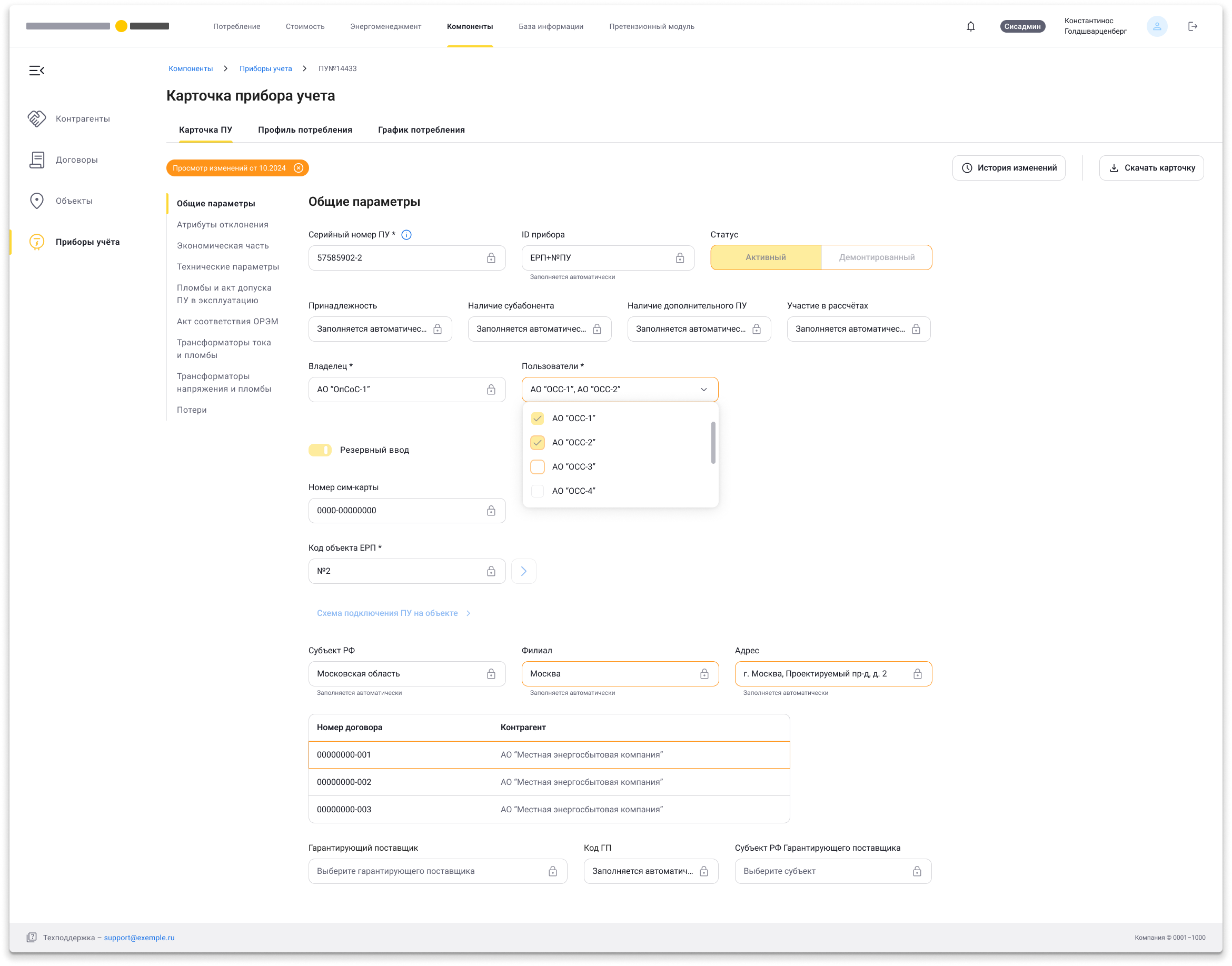
Initiatives temporarily changed system parameters. In a historical view, users could see which values applied in the selected month and which fields had been changed by an initiative.
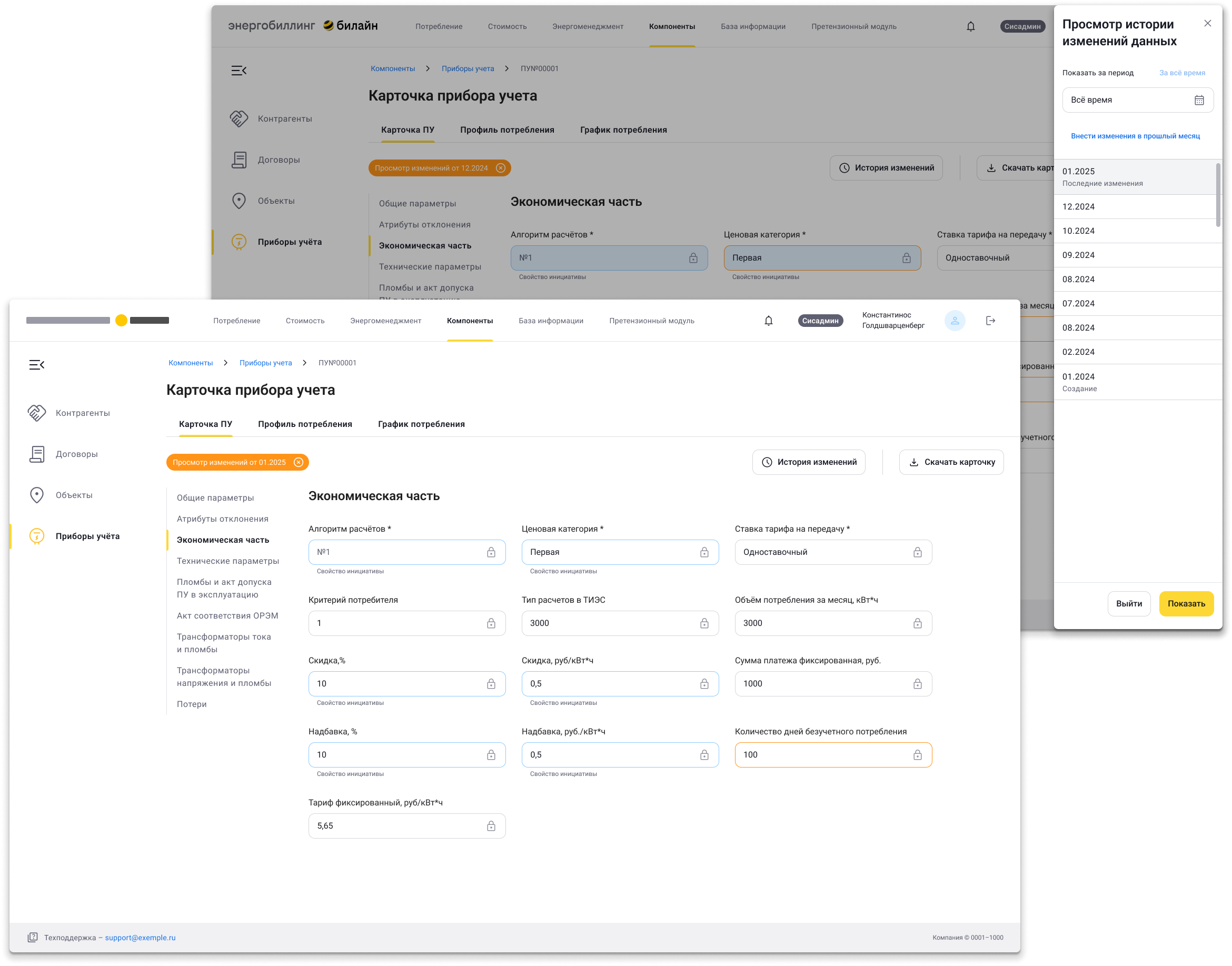
I helped design the historical-record mechanism and proposed a solution that became the basis for an interactive prototype. It linked date-specific views with the temporary effects of initiatives while preventing edits to closed periods.
Detail views · Tables
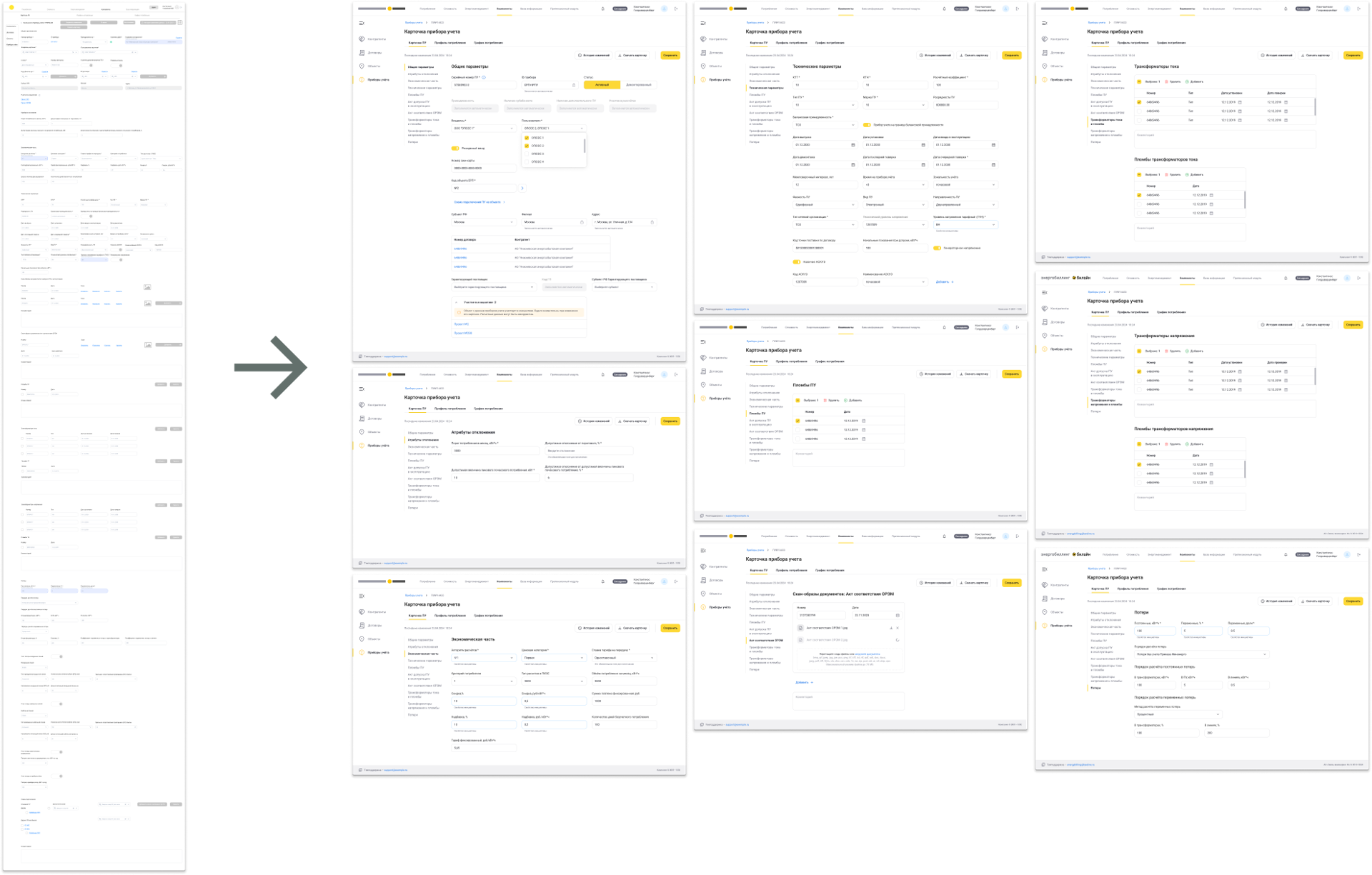
Detail views contained dozens of fields across several sections, while tables combined related metrics and actions. Users needed to reach the relevant section quickly and inspect details without losing the original list.
I proposed dividing a long detail view into meaningful sections and keeping their names alongside the content. This helps users reach the data they need and stay oriented in a large interface.
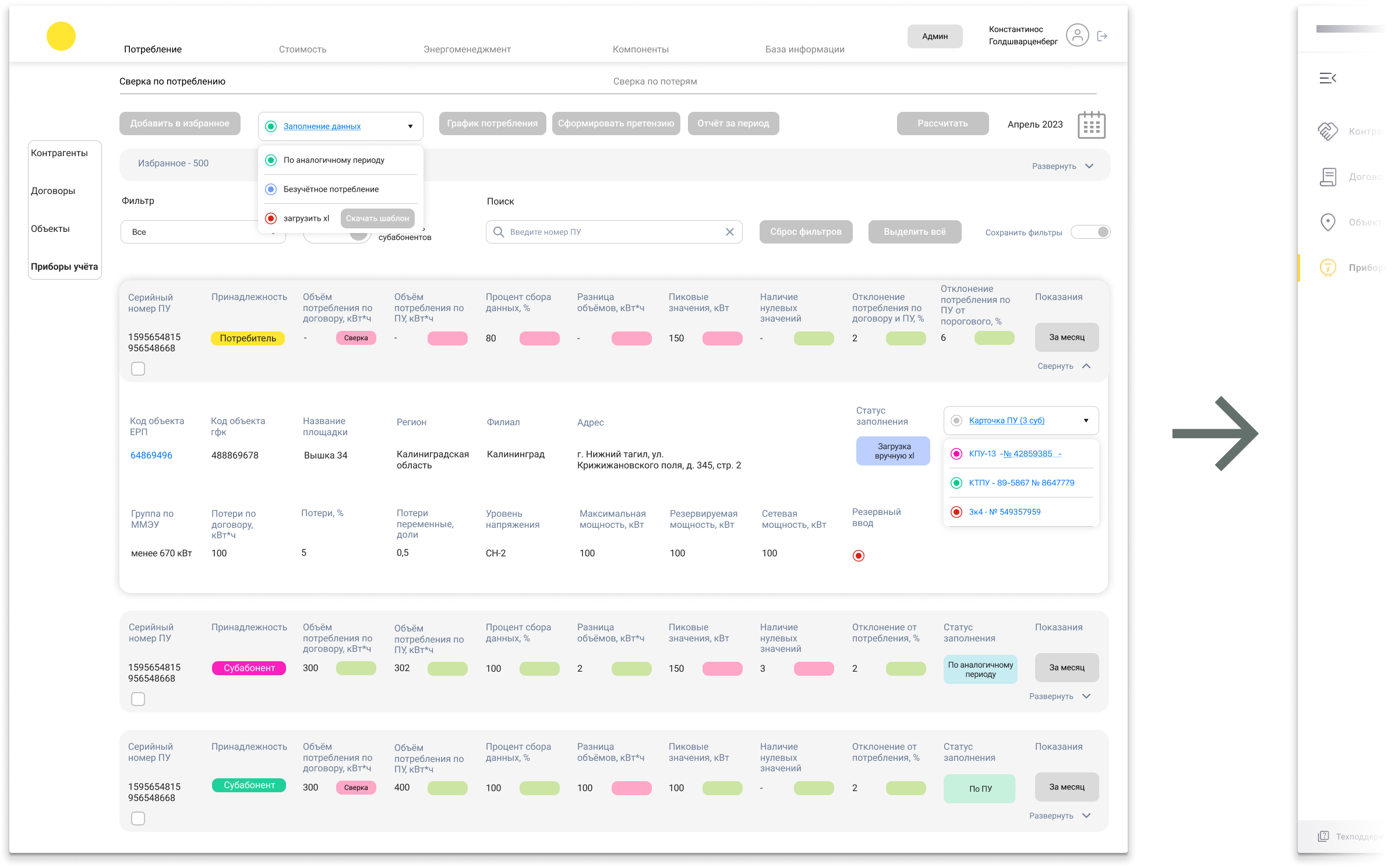
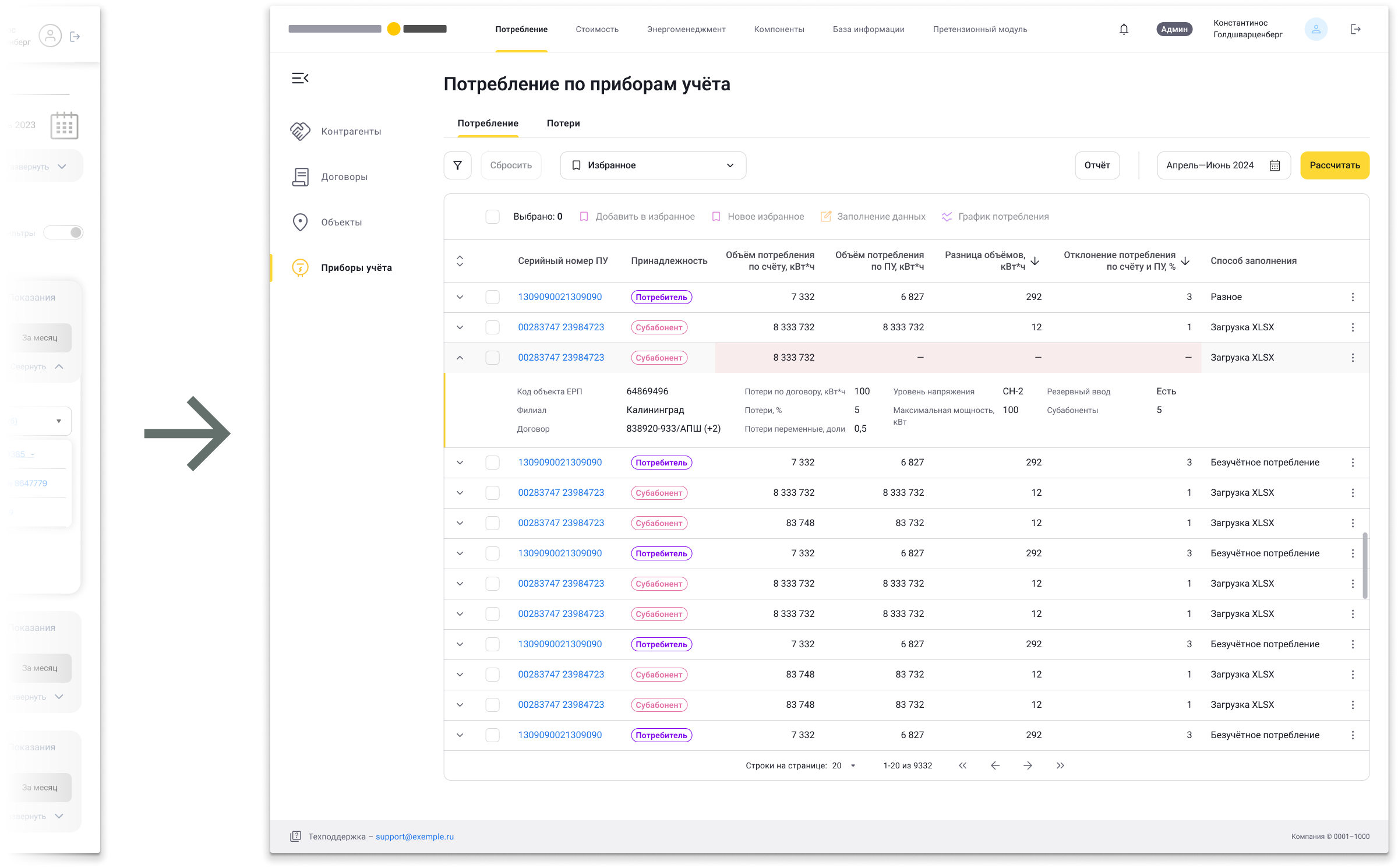
Initially, each meter had its own expandable table: few meters fitted on screen, and repeated information took up much of the space. I proposed one table with expandable rows. After discussion with developers and the Product Manager, the solution was adopted as the basis for implementation.
Takeaway
I designed solutions beyond a single area of the platform. Use cases became a way to capture and pass on important information between development stages, while the interface patterns could be used elsewhere in the product.
For the team
Use cases supplemented user stories and reduced questions about scenarios and prototypes during handoff to development.
For the product
Section navigation and expandable rows were implemented in code and later reused in other areas. Historical records and initiatives were developed as an interactive prototype and planned for future releases.